
Wheel of the Garden: October Pumpkin
October Pumpkin
Story, photos, and recipe by Jenny Krueger, AMS Garden coordinator
October in Skagit County offers a special magic. Misty mornings, blue-sky afternoons, clusters of orange and red and cream pumpkins adorning neighborhoods. My family just made our annual pilgrimage to Gordon Skagit Farms, where we enjoy the stunning artistic displays, find the perfect pumpkin to carve, and choose some unusual-looking varieties to combine with our garden-grown ‘Cinderella’ pumpkins for extra-special autumn decor. Though many local farms grow pumpkins, Gordon’s is known for growing lots of interesting varieties, over 150 different kinds of pumpkins and squash!


All pumpkins are winter squash, but not all winter squash are pumpkins. The distinction is a bit murky (and three distinct species produce a wide variety of pumpkins and other summer/winter squash), but generally pumpkins are recognized by their round, ribbed shapes. Most ripen to orange, but others might also ripen to white, cream, grey-blue, blue-green, red-orange, or red. All pumpkins and winter squash are in the Gourd Family (Cucurbitaceae) and originate in the Americas. These nutrient-dense crops that store well for winter have been nourishing people for over 5,000 years. The flesh is full of fiber and potassium, as well as vitamins A, C, and B6, and the seeds are a source of healthy fats, magnesium, zinc, and antioxidants.
Most carving pumpkins and the commonly sold baking pumpkin ‘Sugar Pie,’ are varieties of the same species, Cucurbita pepo. This species also includes zucchini and other summer squash that are harvested young and tender. Another species, C. moshata, originates in the tropics and includes the ‘Seminole’ pumpkin, a favorite of gardeners with humid conditions and squash vine borer, like Meg from Meg Grows Plants. Thankfully, neither of those issues is a problem here on Fidalgo Island. The third species, C. maxima, grows well and includes my favorite variety: ‘Cinderella.’
I noticed these big, flat, reddish-orange pumpkins stacked like cairns when I first went to Gordon’s many years ago, and I fell in love. I’ve grown them in my garden for the last five years, and they bring me more delight than anything else. I adore their plump, squatty shapes and occasional subtle striping. Sometimes the deep, rounded lobes are distinct; sometimes they are nearly smooth. I can understand why the animators of Disney’s 1950s Cinderella used these pumpkins for inspiration in their studio. They are gorgeous! And delicious. What could be better to grow in the garden?
Also known as ‘Rouge Vif d’Etampe,’ these beauties were popular in the Parisian markets of the 1880s, and in 1883 Burpee introduced it to the United States through the seed trade. As the translated name, ‘Vivid Red of Etampe,’ suggests, they have the potential to ripen to an intense red. Mine, however, don’t get enough heat or sun to get beyond reddish-orange at best, and that’s what I generally see at local farms as well. That’s fine with me, though. I love watching the pumpkins ripen on the vine from yellow to orange to reddish. ‘Fairytale’ (also known as ‘Musquée de Province’) is another popular French heirloom pumpkin and is sometimes confused with ‘Cinderella.’ It has a similar shape, but ripens to a brown-orange, and it is a Cucurbita maschata pumpkin.

When growing an heirloom pumpkin, it’s easy to save seed. Just be sure that you are not accidentally cross-pollinating with any other varieties within the same species (or you may end up with an inedible Franken-squash). For example, if you are growing ‘Cinderella’ pumpkins, isolate flowers from other varieties of Cucurbita maxima – like ‘Hubbard’, ‘Kabocha’, or ‘Lakota’ squash. Because zucchini is C. pepo, I never have to worry about my zucchini crossing with my ‘Cinderella’ pumpkins, which I appreciate. After scooping out the seeds, wash the gunk off and pat dry. Let the seeds completely air dry on a plate or paper towel before storing in an airtight container in a cool, dry location. Be sure to label and date!
I’ve been saving seeds from my best pumpkins since my first planting in 2021. To be honest, though, all my pumpkins in 2025 struggled. Maybe it was the weather, or something else, but the fruit was late to set and didn’t mature as well as usual. They still fed my family and me, but this past growing season was the first time that the seeds I had saved didn’t germinate. I suspect, now, that they weren’t fully developed. Luckily, I had sown a second hill with new seed (to introduce some more genetic variation), which germinated fine. Each of the three sprawling vines produced one lovely pumpkin, 10 -12 inches wide and weighing 9 - 16 lbs. I also found some extra seeds from my 2024 crop, so I plan to try those next year, along with some that I save from my crop this year, to keep my own garden-selected pumpkins growing.

The pumpkins that I grow do not always reach the 12 - 24-inch width and 15 - 20 lb. weight that some seed packets describe, but they are plenty big to work with in the kitchen. A moderate size is helpful when the pumpkin is on a cutting board! After scrubbing it down well, I usually cut the pumpkin in half, scoop out the seeds to roast, bake half the pumpkin for puree, and cut the other half up for soup. My family loves the Savory Spiced Pumpkin Soup recipe from Maria Rodale’s excellent cookbook Scratch. Usually, half a ‘Cinderella’ pumpkin yields enough for two or three batches of soup, so I freeze whatever raw pumpkin is left over for later cooking (the soup itself does not freeze well). After the baked pumpkin cools, I scoop it out of the skin and use an immersion blender to puree it. I freeze some of this in ¼ cup servings to substitute for sugar in my sourdough waffles, and I freeze some of it in 2 cup servings to later bake in my famous pumpkin bread. Or, I commence a baking marathon and stock my freezer for potlucks and gifts.
There are some wildly differing opinions on the flavor of ‘Cinderella’ pumpkins. Harvesting History, an heirloom seed company, describes the flavor as “tasteless” and suggests growing it only for ornamental value. I couldn’t disagree more. It does have a mild flavor, but that’s a pro for me. I personally don’t care for a deep, squashy flavor. If you do, perhaps try the ‘Fairytale’ pumpkin instead. Or the ‘Jarrahdale,’ which is an Australian heirloom variety from a successful cross between ‘Cinderella’ and ‘Blue Hubbard.’ While deep in the pumpkin rabbit hole, I enjoyed watching Jag Singh of Daisy Creek Farm taste test seven varieties that he grows. He judged ‘Cinderella’ to be his top choice in savory applications: soups, pastas, and so on.

For baking, some say ‘Cinderella’ is too watery. I will agree that there is often a small pool of water that collects on the top of the puree; this is easily spooned out. Some bakers drain it, but I’ve never found that necessary. I’ll admit that I’m not a pumpkin pie kind of gal, but I have a dear friend who is known for her pie skills, and she always puts her ‘Cinderella’ pumpkins to use after their show on the porch. Personal taste aside, I find it hard to swallow that a popular Parisian pumpkin was not valued for its culinary use!
Whatever variety of pumpkin that suits you, be sure to get it growing as soon as the soil really warms up. Pumpkin plants take 100 + days to mature, so there’s no time to waste around these parts. Their seeds need a soil temperature of at least 60 degrees, but 70 degrees is even better. That means sowing or planting around the beginning of May. Pumpkins are generally advised to be direct sown (lay the seed flat on its side), but with our cool springs, transplants sometimes do better – so long as they are gently planted out when they only have one to two true leaves. Any larger and they could easily be shocked by root disturbance.
Pumpkins are heavy feeders, so be sure to use plenty of compost and a well-balanced organic fertilizer at planting. They also benefit from supplemental feeding throughout the growing season if you want to maximize growth. Signs of readiness to harvest include developed color, hardened skin that a thumbnail cannot easily pierce, and a corky stem. Curing for 7-14 days inside or in a sunny area protected from rain helps the rind to harden for storage. Properly cured, pumpkins can store for months in ideal conditions. Decorating with them outside can reduce the storage potential, especially if in direct sun or exposed to light frost, but I just keep an eye on mine and process them if they are showing signs of a developing soft spot. Don’t stress about the ideal conditions for growing, curing, or storage: you likely won’t have them. But nonetheless, we can enjoy gazing at our pumpkins and eating them too!

Jenny’s Pumpkin-Flax Bread
Ingredients:
2 cups raw sugar
1 cup sunflower oil (or similar)
4 eggs
⅔ cup ground flaxmeal
2 ⅔ cups flour (white, whole wheat, or mix)
2 tsp baking soda
1 ½ tsp salt
2 tsp ground cinnamon
½ tsp ground ginger
½ cup water
2 cups pureed pumpkin (or 1 15-oz can of pumpkin)
Directions
Preheat the oven to 350 degrees F. Grease the bottom and sides of two metal bread pans (9x5x3) and set aside.
In an extra-large mixing bowl or stand mixer, beat sugar and oil on medium speed. Add eggs one at a time and beat well.
In a large bowl, combine flaxmeal, flour, baking soda, salt, cinnamon, and ginger. Whisk to combine. Alternately add the dry mixture and water to the sugar mixture, beating on low after each addition until just combined. Beat in pumpkin on low speed. Pour into prepared pans.
Bake for 1 hour, or until a wooden toothpick or fork poked into the center comes out clean and the sides are pulling away from the pan. Let stand for a few minutes, then use a spatula to loosen the sides and bottom before inverting over a wire rack. Cool completely before slicing.
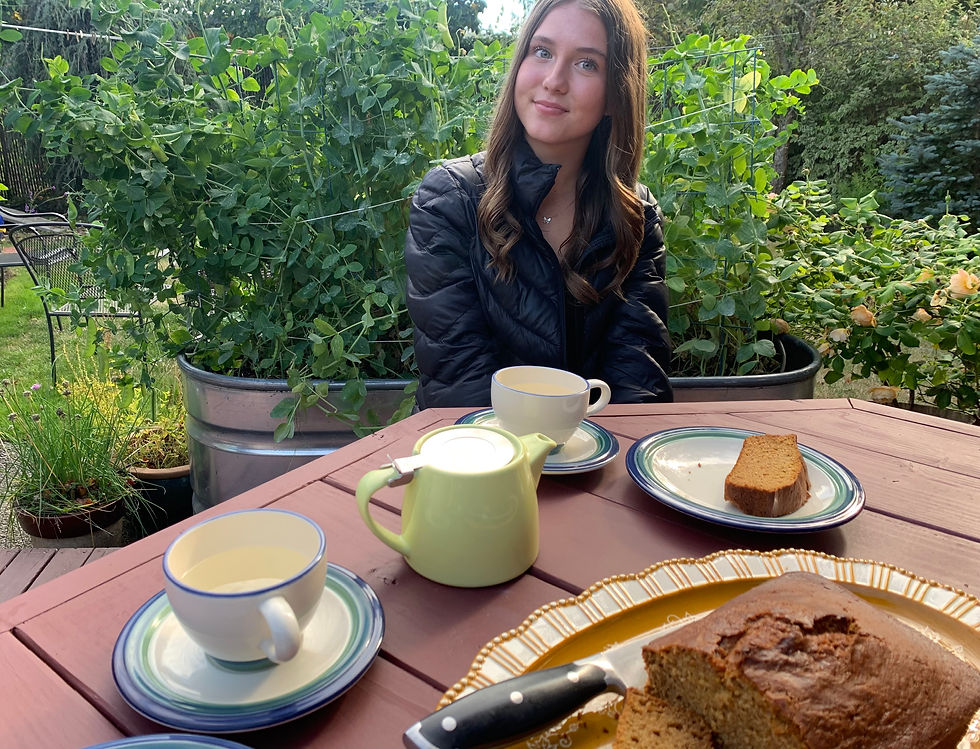
Enjoy with a cup of herbal tea and loved ones!


Wonderful pumpkin history and write-up! This was my first year growing squash and pumpkins and I'm hooked. Produced 30. My 3 acorn squash grew 16" long (but still tasted great). Can't wait to try more varieties next year. Thank you. Janet Andrews